Monday, 9 May 2011

Oaks on Mull


Here are two contrasting types of oak found within a couple of hundred yards in a woodland on Mull. Above looks as if it is an open grown tree: the branches spread in all directions, and the main trunk is short and stout. The trees in the background have the same characteristics.

Whereas this stand is more typical of the old oak coppice woods of Argyll: lots of oak stems all crowded together and forced up to find light.

Wednesday, 4 May 2011

Birds nest orchid

A first for this wood in Argyll, here's a close up of a flower stem of the birds nest orchid

..& one showing where it is growing on a ride through the wood. It's an unusual flower in that it does not depend on the sun for energy, collecting energy from dead vegetation in partnership with a fungi instead.

Friday, 29 April 2011

Bananas in Highland?


Curious? Visit http://aspen2020.blogspot.com/

Green hairstreak

Disguised as leaves, a pair of green hairstreaks hang out in a juniper bush.

Cherry blossom

Bird cherry is abundant along the R Enrick in Glenurquhart.

Saturday, 23 April 2011

Treeline woods

Last week, I spent a day at around 600m altitude on Coignafearn Estate, collecting cuttings from montane willow with Diana Gilbert, who has just finished her PhD on montane scrub. The cuttings will be propagated at Highland Aspen Group's tree nursery at Kincraig.
As the picture shows, montane willows only survive where deer can't reach, so we needed a reasonable head for heights.
As well as a few bursts of adrenalin, we enjoyed several sightings of golden eagle and ring ouzel. And a few smaller creatures, some of which feature below.
Most of the willows were in flower
Willow pollen is an important food source for early invertebrates, such as this bumblebee
High-flying wasp refuelling
Basking in the sun, this lizard is sloughing its old skin

Friday, 22 April 2011

Blackthorn Blossom

The leaves below are bird cherry.

Wider........

Big birdie.......

If you click on the image, you will see there is a male osprey sitting at the top of this dead tree.

Tuesday, 19 April 2011

Rhodendron ponticum in the spotlight

Rhododendron ponticum is increasingly recognised as a major threat to woodlands, especially in the west of Scotland, where the conditions are perfect for this invasive evergreen to take over native woodlands. It is such a succesful weed that it has caught the attention of the BBC, who are making a film on weeds.
A crew from Blast! Pictures were in Cowal capturing some footage as some of the crew from Kilfinan Community Forest Company get warmed up for the task of removing the ponticum from their forest. Here's some of both crews working away
Chris Collins, who is presenting the programme & KCFC's David Blair talk about some of the problems associated with having ponticum in your forest.
Chris was up for having a go at tackling the ponticum himself: here's David showing him the ropes.
The programme goes out on BBC4 in June.


Tuesday, 12 April 2011

Giving away aspen trees..........

Highland Perthshire aspen trees, propogated at Edinburgh Zoo by RZSS, are being distributed this spring to eight different sites in Perthshire and the Angus Glens. Each site is receiving 6- 8 clones free of charge, the objective being to promote the species, the project partners supporting work to help the species, and to increase the genetic diversity present at a number of key locations.

Richard Barclay (above right) plants aspen in an SRDP-funded woodland creation scheme at Innerhadden, Loch Rannoch last month. Below you will see deliveries to two other sites today, plus a planting afternoon at Bamff Estate on Sunday.

All the trees are being donated to people who we know will look after them.

Closer...a happy man

A happy Tober Brown

Tober Brown of Tombreck, Loch Tay side, took delivery of some aspen clones today. They will be planted in to some new SRDP-funded shelter belts that he has been planting this spring. Well done Tober.

Mark Hayes with two of the aspen clones delivered to Comrie Croft today

Comrie Croft shop front

Rain shower passing over Loch Earn

Looking the other way......

Wednesday, 6 April 2011

Growing Up With Trees


Last week I visited a primary school that has been on our Growing Up With Trees programme for two years. The schools collect native tree seeds from nearby woods and set up their own tree nursery, starting the seedlings in pots.


These tree seedlings have been kept in a cold frame quite successfully for 2 years, although they would do much better in separate pots, and better still in the ground. The brown leaves on the Oaks are last year's. The trees are still alive though the nutrients in the compost are probably exhausted, so they are really just clinging on.

The school is going to transplant them into their wildlife garden. This needs to be done before the sap rises and they come into leaf.

Tree Nursery gone mad


This structure would be ideal for a tree nursery as posts and rabbit netting can be attached.

Unfortunately there are actual trees in it already. The staff don't know when these were planted. Maybe it is a very old tree nursery. The trees should be planted in the ground at 3-5 yrs old, depending on species. These are more like 20 years old.

They will have to be removed, roots an all before the soil can be prepared and the seedlings transplanted. Somebody is going to have their work cut out.

Tuesday, 5 April 2011

Spring getting moving in Argyll

This ash seedling in a small fenced regeneration area is not showing any visible signs of spring yet. However ash are one of the last trees to break into leaf
Spring flowers get there first, with this primrose, or first rose, making a fine display
The first of the violets are also providing a dash of colour on the woodland floor

Friday, 1 April 2011

Successful Projects in Highland perthshire as well.

Following on from Carol's good news below, we had a successful application in Highland Perthshire where one of our clients was successful in a six- figure application to put in trials and footpaths at a tourism business, with tree planting and management work also in the pipeline as well.

We have also had some succeses through the RPAC- bypass route for woodland creation.

Wednesday, 30 March 2011

Looking to the Future - An Update

Back in December our North East Advisor submitted a proposal for the creation of 480ha of new native pinewood in the North East (see Blog posted 10/12/10) to the Scottish Rural Development Programme.

The proposal was considered, along with a number of other forestry schemes, by representatives of a number of Government Environmental Agencies last month.


We were notified of the successful outcome of these deliberations recently and our North East manager and the landowner are delighted that the proposals were approved!


The planning work of engaging contractors and ordering plants from tree nurseries is now underway.

Will keep you posted on progress over the coming 12 months.


Juniper is one of the native species included in the pinewood proposals

Smoke Signals

This is the time of year for staff on a number of Highland Estates to undertake their annual management of heather moorland known as muirburn. This practice is usually signaled by a distant plume of smoke on our hills, particularly in the East of Scotland. The aim of burning small patches of heather is to create a mosaic of growth stages. Young regenerating heather shoots provide a food source for many moorland residents such as grouse and livestock as well as providing nesting habitat for golden plover and skylark. More mature heather provides nesting habitat as well as cover from adverse weather and predators for many species including the mountain hares. There is a Muirburn Code which Estates must follow to ensure burning is completed under the correct conditions, within the designated season and with no damage to other important habitats such as native woodland and montane (high altitude) heath.

Any mistakes can be costly not just for wildlife but also for those undertaking muirburn.

Friday, 25 March 2011

Glen Lyon Pines

Looking up Glen Lyon

Spring canopy

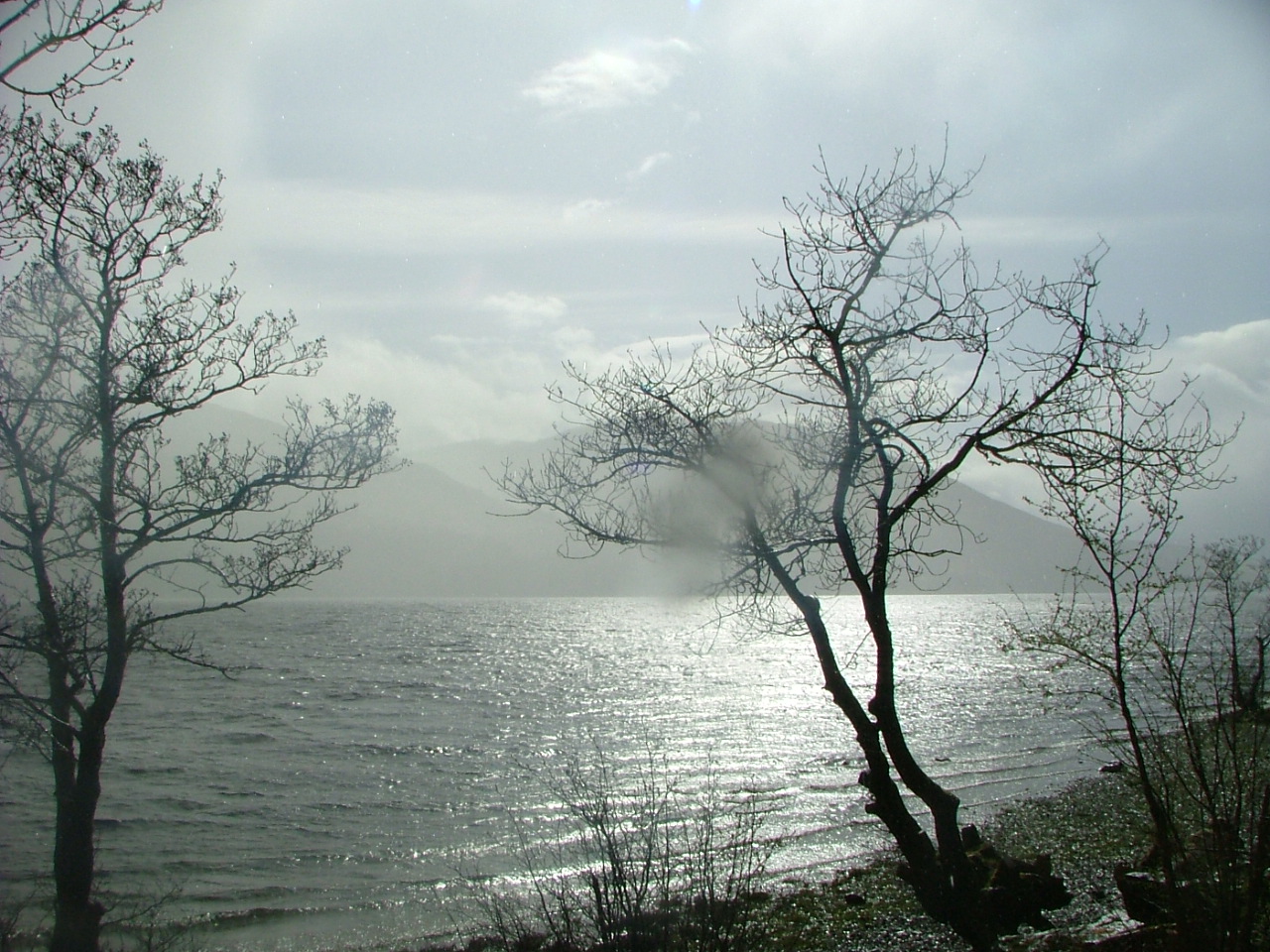
Looking across a west coast loch into a mixed woodland canopy, you can see that spring is getting going as tree canopies start to change colour. Some trees are more easily identified than others. The darkest colour is birch ( for example at bottom right), with alder showing a slightly browner dark to its left. The lighter brown is larch, which is scattered through the wood, while the palest trees are a mix of oak, ash, sweet chestnut, sycamore, and even some aspen. The round tops of the scots pine on the ridge and the pointy sitka spruce on the hill behind remain evergreen.

Tuesday, 22 March 2011

Rhodi' bashing


Our volunteers have started doing some work at Scone Palace, Perth. We have been clearing the Rhododendron that shades out native plants including tree seedlings, and makes the ground acidic so that little else can grow. It is important to realise that there are 100's of species of Rhododendron but that only one species, Rhododendron Ponticum is causing the problems. Most of them originate from garden escapees in Victorian times. Though beautiful to look at with their large pink flowers, and fine if contained in a garden, they cause a lot of problems if allowed to go wild in a native woodland.


Here we are using a traditional cutting method (known as rhodi' bashing), although the latest thinking is that it is much more effective to lever and mulch. This literally means to lever it out by the roots and put down a mulch of perhaps leaves or compost to prevent further growth from any roots that were missed. It takes a lot longer and is harder work but the theory is that you don't then have to do it again year after year.


We will be at Scone Palace again in April, this time transplanting snowdrops. So you will get to see them for free while doing your bit for native woodlands. If you are interested click on http://www.scottishnativewoods.org.uk/ for details (or click on our logo from here)

Monday, 21 March 2011

By the river.......

This very striking image is by wildlife artist Alistair makinson, who helped us greatly with fundraising for our Tay Western Catchments Project.

You can see more of his work at: http://www.alistairmakinson.com/

Friday, 18 March 2011

oak in evening sunshine

A full canopied oak tree showing up well in a bit of Spring sunshine in Argyll. The tree has the usual features of Argyll oak, covered in mosses & liverworts. It was probably planted: the dyke in the picture was built to protect a new woodland in the first half of the nineteenth century.

Tuesday, 15 March 2011

PAWS Thinning in Fife

Out and about in Fife, looking at some of the sites where the Alstor is proving its worth in Plantations on Ancient Woodland Sites. As the first stage of restoration, we have started to thin the conifers out to let more light onto the woodland floor.

The hand fellers have left a very tidy job here. Well presented logs means that the Alstor can carry large volumes of timber to the roadside every day.

Wednesday, 9 March 2011

Rainforests in Morvern

Out and about in the temperate rainforests of Morvern yesterday, as a part of our Atlantic Hazel Action Group Project. The workshop on managing woodland plants allowed woodland managers and owners to look at some of Ardtornish's woods, while learning from leading experts on bryophytes, lichens and fungi.

Sunday, 6 March 2011

Harbinger of spring


Aspen propagation


Highland Aspen Group organised a training day for volunteers. We collected roots and learned how to graft. More at www.aspen2020.blogspot.com

Butterbur

White butterbur Petasites albus near Loch Ness. This non-native produces distinctive flowers very early in the season. More at www.scottish-invasives.blogspot.com

Thursday, 3 March 2011

Bracket Fungus on a birch tree

Hazel catkins oot the noo.....

They have been out for about 10 days or so now in Highland Perthshire.

Scots Pine below Clunie Dam

Thursday, 24 February 2011

Finishing the bridge

This footbridge was put in to open up access on the network of paths in the Falkland Estate.