Thursday, 22 July 2010

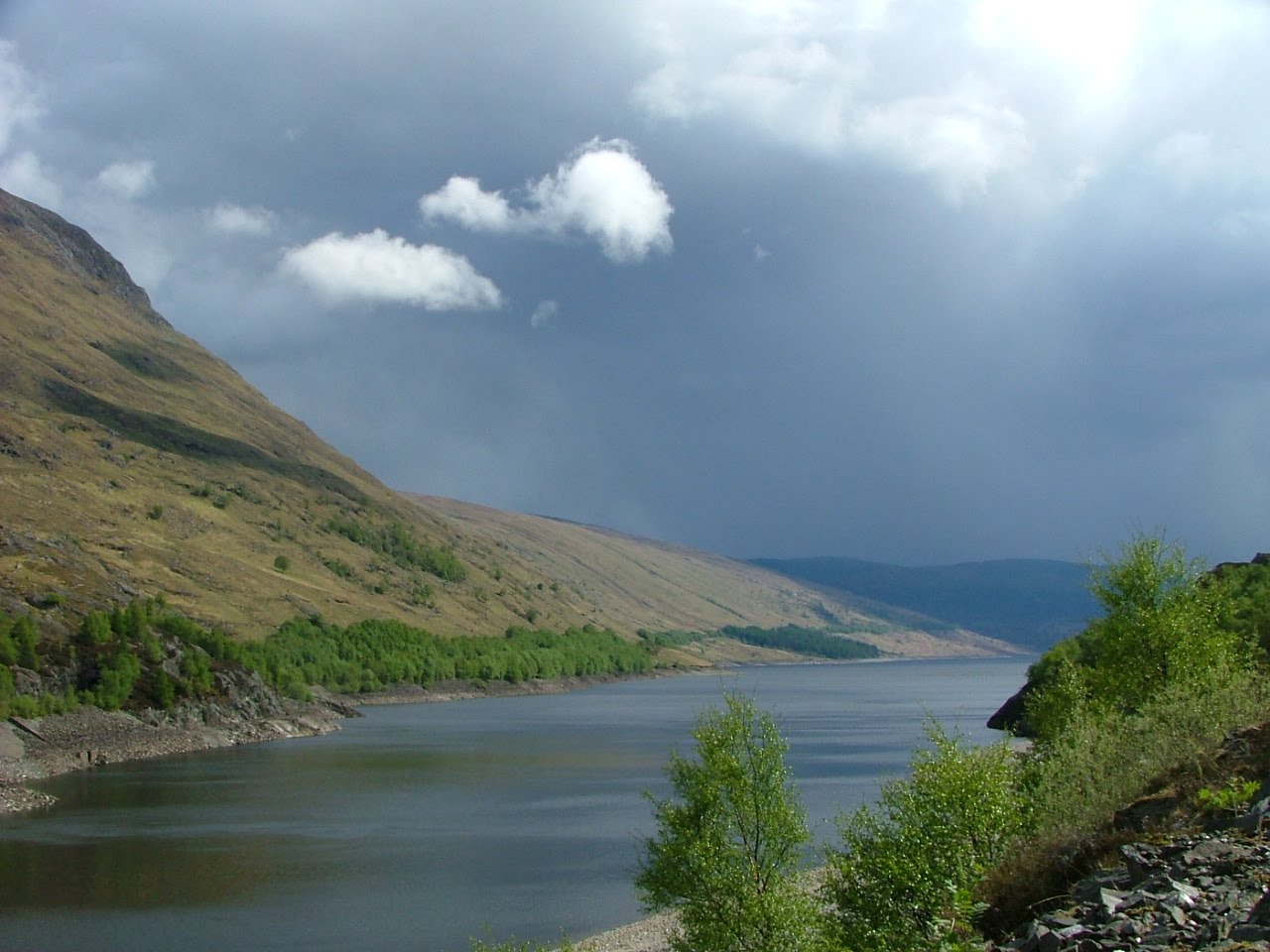
Raging torrent


.......normally just a little burnie.

Stronafian Forest

Been looking at Stronafian Forest in Cowal. This is part of Scotland's forest: the National Forest Estate, but it has been placed on the disposals list, so it is for sale. The Colintraive & Glendaruel Community Development Trust are interested in buying the plantation, and we've produced an options paper to help them.
The forest is mostly an upland sitka spruce plantation, although there are some areas of native woodland.

Friday, 16 July 2010

Committed to woodland restoration

Scottish Native Woods makes a long term commitment to woodland restoration.

In the year 2000 we helped a owner of an ancient woodland secure a forestry grant to regenerate part of the woodland by erecting a deer fenced exclosure. The browsing levels, a consequence of the high numbers of roe deer, meant that the young tree seedlings could not grow & establish above the grass.

Over the last 10 years we have visited the site, returning to the same locations or fixed points to monitor the changes that have taken place.

In 2000 the site was a grassy area. I think the photographs below speak for themselves!


Fixed Point A - Photo taken in summer 2006


Fixed Point A - Photo taken in summer 2010


Fixed Point B - Photo taken in summer 2006


Fixed Point B - Photo taken in summer 2010
The tree regeneration is so dense that the photo was taken outside the exclosure.
For scale the cane in the photo is 1.5 metres.
It is hoped that over the next couple of years the fences will be removed.

Monday, 12 July 2010

Visit to Smeaton Lake Arboretum

This is a cracker of a Giant Sequoia (sometimes called Wellingtonia) - I couldn't guess its height but it is neck crickingly tall.  We used to call these punch trees because of the soft spongy bark that didn't hurt your fist when you punched it.
Smeaton Lake is near East Linton and home to many native tree species as well as some lovely exotics.
The woodpecker damage is very obvious on this sequoia but it doesn't seem to harm it in the long term.
Although this tree may be a youngster as redwoods go it probably has bark more than 30cm thick.
Some chunky burrs on this old sycamore
Close up of the fern growing on the burrs on this old sycamore
Interesting texture on this old yew
This is some Rhododendron (not ponticum) - thought it had lovely bark.

Friday, 9 July 2010

Rowans in the Glen

Cast your mind back to a few months ago when all was covered with snow ......

These old rowan (Sorbus aucuparia) trees growing near an old croft site in the North East show the damage caused by hungry rabbits during last winter.

The rabbits however did not remove all the bark surrounding the trunk of the tree. The remaining small sections of bark continue to allow food and water to flow resulting in these old trees coming into leaf again this year as well as producing blossom and potentially a bumper crop of berries for the autumn thrushes.

Hopefully this heroic effort does not contribute to the early demise of these trees.

Friday, 2 July 2010

Twinflower Delight

This summer our North East Manager is busy surveying a number of sites where new native woodland schemes are proposed.

This week I came across a lovely sight near a group of Scots pine trees on a heather moor.


The delicate pink flowers are Twinflower (Linnaea borealis) only 2.5" tall. The name of the plant describes the two bell-like flowers which hang on either side of the stem.

Twinflower is a rare plant of the eastern pinewoods and some mature undisturbed pine plantations. The joy was to find such a large clump flowering.


Can you spot the twinflowers in this picture?

Two deers grazing in Glen Lyon


Closer........


.......grazing quietly.

Monday, 28 June 2010

As some of you may know we are a member of Bighearted Scotland, a consortium of charities who work together to raise funds for our very worthy causes.  As part of this we hold an awards event in September to celebrate those people who give of their own time to help others.  We are looking for nominations NOW.
Do you know someone who goes that extra mile to care for others or who raises vital funds for any charity?  If you nominate them now they could be selected to attend the Gala Evening hosted by Lorraine Kelly, with awards being made by Deputy First Minister Nicola Sturgeon.
A simple nomination form is on the link below.
Please visit http://www.bigheartedscotland.org/

You can also buy tickets to attend this gala event at the brand new Grand Central Hotel in Glagow on September 10th.  We'd love to see you there.

Monday, 21 June 2010

Friday, 18 June 2010

By the river Lochay........


Fern


Closer......


Same shapes........


Monday, 14 June 2010

Our patron says hello


Our patron, Professer David Bellamy, said hello on Saturday when he came to Scotland to join the protest group 'Say no to Fallago'.  This group are campaigning against the number of wind farms proposed for the Lammermuir Hills.

David said he was looking forward to seeing us all again soon when next visits one of our projects.

Saturday, 12 June 2010

Coralroot Orchid


Coralroot Orchid is a small, rather inconspicuous plant. It is not common, but probably overlooked, occuring in damp woodlands and dune slacks.


I have been observing a small colony of this rather unusual plant for a number of years. It is growing in a wet woodland close to my home near Loch Ness. The tallest flower spikes I have seen are about 15 cms in height.


Distribution


Coralroot Orchid is found most frequently in North East Scotland. ( Thanks to NBN for the map .... http://www.nbn.org.uk/ )


A spectacular alien


About 10 years ago, another plant arrived in the same woodland. Like Coralroot Orchid, Skunk Cabbage is also unusual, but in quite a different way. It has a large yellow flower spike and huge leaves up to a metre in length.


Space invader


Skunk Cabbage is a native of North America, and has become a problem in some wet woodlands. It can spread fairly rapidly, and crowds out native plants.


David and Goliath


Last year, I decided to take action, and tried digging up the Skunk Cabbage, but with little impact.

This year, the invader is starting to encroach on the diminutive native's territory - (note the 2 orchid spikes front stage)


Time for action

A close-up of David in Goliath's shadow.

So, (with the landowner’s permission) it's time to get a bit more serious. In mid May, I removed all the Skunk Cabbage flower heads as they started to set seed. Today, I mapped and marked all the coralroot spikes, so I will know which areas to avoid, and in late summer I am planning a careful application of glyphosate. Watch this space.


Tuesday, 8 June 2010

Pier on Loch Ossian


Two boats.......


The train to Fort William


Looking along Loch Treig


Single tree


Bluebells......


Bluebells in bracken are quite common, with the bracken acting as a substitute woodland environment.

Birch trees above Loch Treig


The Grey Corries


Native Woodland in Glen Roy


Mist in the Grey Corries


Nice little waterfall.....


......in Strathmashie Forest, Laggan


Saturday, 5 June 2010