Saturday, 12 June 2010

Space invader


Skunk Cabbage is a native of North America, and has become a problem in some wet woodlands. It can spread fairly rapidly, and crowds out native plants.


David and Goliath


Last year, I decided to take action, and tried digging up the Skunk Cabbage, but with little impact.

This year, the invader is starting to encroach on the diminutive native's territory - (note the 2 orchid spikes front stage)


Time for action

A close-up of David in Goliath's shadow.

So, (with the landowner’s permission) it's time to get a bit more serious. In mid May, I removed all the Skunk Cabbage flower heads as they started to set seed. Today, I mapped and marked all the coralroot spikes, so I will know which areas to avoid, and in late summer I am planning a careful application of glyphosate. Watch this space.


Tuesday, 8 June 2010

Pier on Loch Ossian


Two boats.......


The train to Fort William


Looking along Loch Treig


Single tree


Bluebells......


Bluebells in bracken are quite common, with the bracken acting as a substitute woodland environment.

Birch trees above Loch Treig


The Grey Corries


Native Woodland in Glen Roy


Mist in the Grey Corries


Nice little waterfall.....


......in Strathmashie Forest, Laggan


Saturday, 5 June 2010

PAWS assessments on Corrour Estate


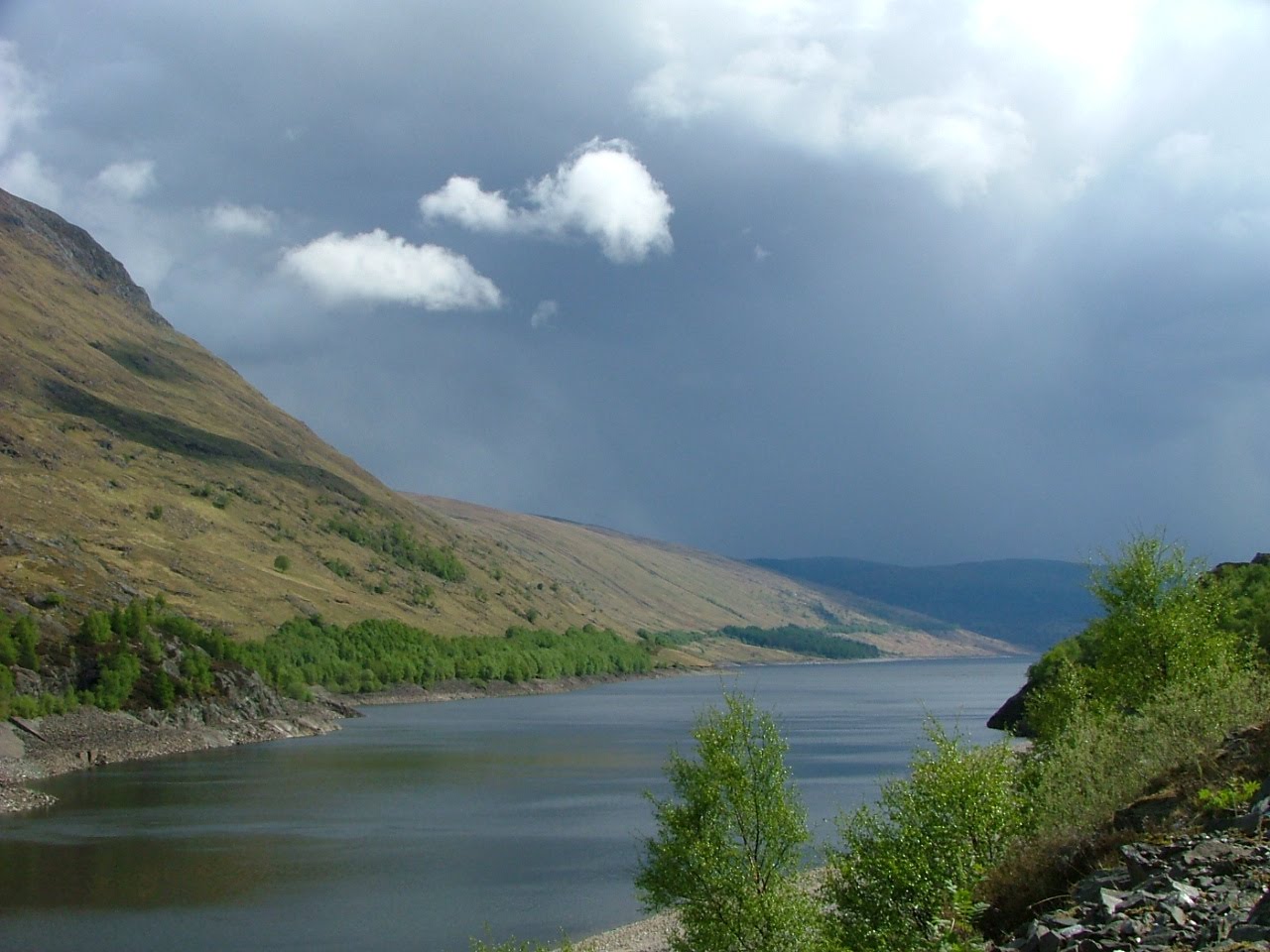
Clouds over Loch Treig


Cloud cap


Loch Treig through the trees


And again.......


Oak tree amongst a conifer crop


Dripping with lichen


These conifers are smothered with lichen.....

Closer.......


Primroses......


A mix of tree species........


Diverse site, some of this is former ancient woodland.

Three layers


You can see here the riparian woodland in the foreground, a band of larch through which light can easily penetrate, and the spruce under which it will be very dark.

Conifers an an ancient woodland site


Birch woodland on the hill


Birch & larch


This PAWS site is fairly secure along this stretch, with birch and larch dominating

Wood sorrell


Looking out across at Laggan Dam


Growing in a rock.....


A snow capped mountain in the Mamores

Tuesday, 1 June 2010

Ash in spring

In Argyll Ash buds were still breaking at the weekend.
The leaflets almost look like claws reaching out for the light.
However before long they turn into a more familiar shape

Wednesday, 26 May 2010

Is summer here?

Three of these beauties were on the pond wall on Sunday.  Has summer arrived?

Tuesday, 25 May 2010

Looking up the strath of the Tay (today)

Wych elm in spring

Wych elm seeds are some of the first tree seeds to ripen. You can see the small round seed in the middle of the round disc. The disc acts as a wing to help the seed disperse.

This tree is only just coming into leaf: here's a bud bursting.

Friday, 21 May 2010

PAWS in Perthshire

Here are some pictures from the Seminar on the Conservation of Plantation on Ancient Woodland Sites that Scottish Native Woods, Woodland Trust and Forestry Commission organised.Above is Scottish Native Woods' Victor Clements, who organised the Site Visits, with Rick Worrell, who did a fine job as the day's chairman.
Tim Hodges, who is the Woodland Trust's main man on PAWS, helped with discussions in the wood.
Simon Lockwood, came north from Scottish Native Woods' Central Lowland Area to talk about ways of minimising the impact of harvesting on sensitive PAWS. He brough along our Alstor forwarder, which attracted a lot of interest.

Sunday, 16 May 2010

Birch woods spreading on Invermark Estate, Angus Glens


This birch woodland alongside the Tarf Water on Invermark estate in Glen Esk in the Angus Glens is regenerating nicely, producing a very natural woodland edge that will be good for black grouse and other wildlife.
This is not under any grant scheme. In 2005, several of the estates in the Angus Glens decided that they would fence out deer over a huge area to reduce ticks and hopefully rejuvenate their grouse moors. On the back of this, several of the riparian woodlands are obviously now spreading, taking advantage of the window of opportunity allowed by a reduction in overall grazing pressure to get away in a pulse like this.Native woodlands can expand quickly when suitable conditions arise for them. In this case, the motivation for a reduction in grazing was something else entirely, but this is the result. This just emphasizes the point that all land uses are inter-connected, and changes in policy in one area can have knock-on effects elsewhere. We are sometimes conditioned to thinking that changes in land practice produce negative results, but that is not the case here.

And again.......

And again......

And again......

And again......

Young birch getting away......

Birch woods on Invermark


Many birch woods in the eastern half of the country became established in the mid 1950s when mxymitosos wiped out the rabbit population.......another good example of native woodlands arising by default.